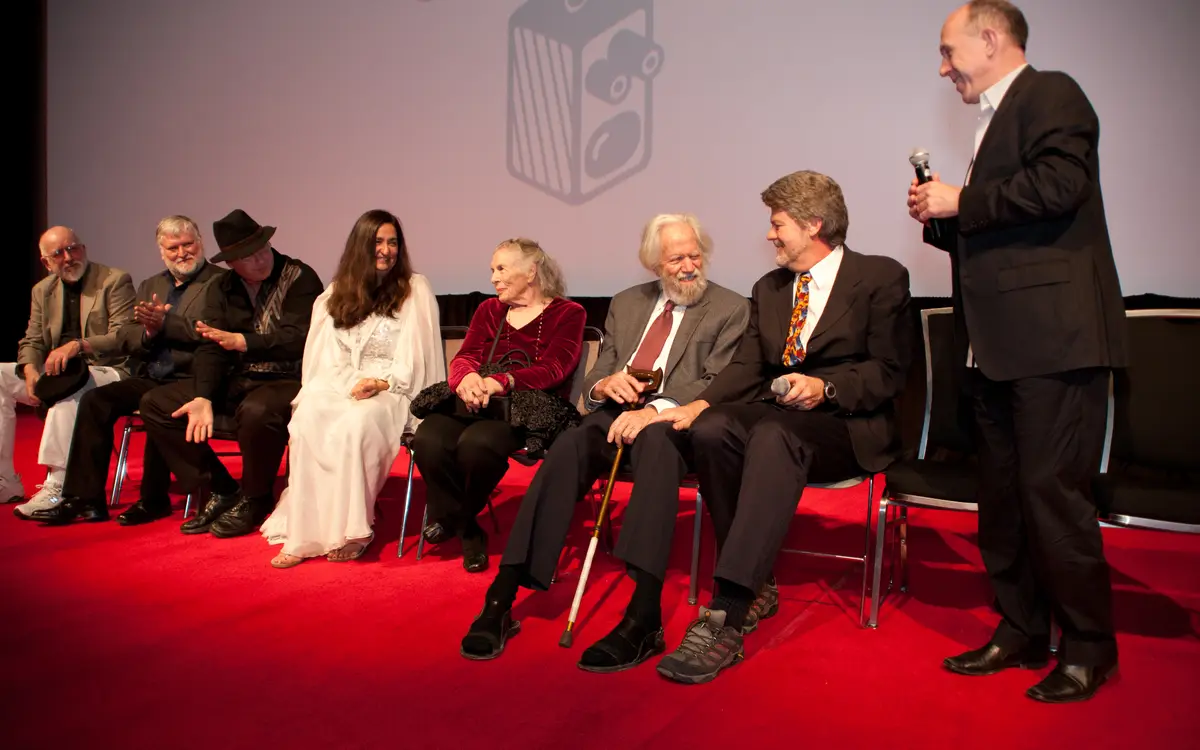
From two orders, for two clients in different businesses. The brief comes first, then everything that came back — nothing trimmed, nothing summarised.
Written for clients we don’t name here. The briefs are illustrative — set out the way the order form produces one, to show what a row on a spreadsheet turns into — and the articles are reproduced exactly as delivered, rendered by the code that renders every order.
Order one
Three articles from one topic cluster
A software end-of-life cluster: near-identical briefs, a technical audience, and every date traceable to a primary source. What an order of dozens looks like when consistency is the whole job.
Sample 01
Exchange 2016 End of Life: Your Migration Window Is Closing
A deadline piece that has to be exact: every date is checkable, and the article says which of two migration routes is the honest answer.
The brief
Exchange 2016 End of Life: Your Migration Window Is Closing
LengthAI-recommended: 850–1,100Guidance, not a rule — the hard cap is 3,500 words.
Keywords
exchange 2016 end of lifeextended security updatesexchange server subscription edition
Instructions
Technical IT audience — sysadmins and infrastructure leads. Every date traceable to a Microsoft primary source. No vendor logos or branding in images. Say plainly where the risk is rather than softening it.
Links & sources
Cite two or three relevant sources with outbound links.
End with a reference list of what you drew on.
Images
3 auto-sourced
Words
929
Images
3
Outbound links
3
References
Listed
Exchange Server 2016 shares Exchange 2019's October 2026 ESU cutoff but has no direct in-place upgrade path to Subscription Edition. — Photo: Book Catalog, via Wikimedia Commons / CC BY 2.0
From Microsoft's lifecycle page for Exchange Server 2016:
Released: October 1, 2015
Mainstream support ended: October 13, 2020
Extended support ended: October 14, 2025
The dates apply to the Enterprise and Standard editions.
An Exchange 2016 server not yet on Cumulative Update 23 is not receiving Period 2 security updates regardless of licensing. — Photo: Florian Lindner, via Wikimedia Commons / CC BY 2.5
The ESU Program and Its Hard Stop
Exchange did not get the standard three-year Extended Security Updates program. It got a shorter, product-specific one structured in two periods:
Period 1 began in October 2025, immediately after extended support ended
Period 2 covers Exchange Server 2016 CU23, and Exchange Server 2019 CU14 and CU15
There will be no Period 3, and Microsoft has said so explicitly
For Exchange 2016 specifically, coverage applies to CU23. A server on an earlier cumulative update is not receiving Period 2 updates whatever the licensing position says, so confirming CU level is the first thing to check.
A traditional Exchange migration is normally scoped in months, which is tight against an October 2026 hard stop. — Photo: Wellcome Collection, via Wikimedia Commons / CC BY 4.0
Why This Is Harder for 2016 Than for 2019
Exchange Server Subscription Edition is the supported on-premises destination. It was released July 1, 2025, follows the Modern Lifecycle Policy, and carries no published end date.
Exchange 2019 can upgrade to Exchange SE in place, in a process Microsoft describes as effectively identical to installing a cumulative update. Exchange 2016 cannot. There is no direct in-place path from 2016 to SE.
That leaves two routes, and both are real projects rather than patching exercises:
A legacy upgrade to Exchange Server 2019 first, followed by the in-place upgrade to Exchange SE. This means standing up Exchange 2019 servers, moving mailboxes and services across, decommissioning the 2016 servers, and then performing the SE upgrade. It is the traditional Exchange migration, done to reach a product that is itself out of support, as a stepping stone.
A migration to Exchange Online as part of Microsoft 365, which skips the intermediate hop entirely and removes on-premises Exchange from the estate.
Microsoft's guidance on the 2016 lifecycle page points at moving to the most recent cumulative update for Exchange Server 2019 to prepare for the in-place upgrade to Exchange SE, which describes the first route. For many Exchange 2016 organizations, the second is the more sensible answer precisely because it avoids building new infrastructure on an unsupported version as an intermediate step.
The Timeline Problem
A traditional Exchange migration, whether to 2019 or to Exchange Online, is normally scoped in months rather than weeks. Mailbox moves are throttled by design, public folders and shared mailboxes have their own complications, and the cutover of mail flow and client access needs planning and a fallback.
Measured against a security update supply that stops at the end of October 2026, an Exchange 2016 organization that has not started is already inside the window where the migration and the deadline overlap. That is the single most important thing this page can tell you, and it is why the advice here differs from the Exchange 2019 page despite the identical dates.
Why the Exposure Is Serious
On-premises Exchange is internet-facing by design. It accepts external connections so mail flows and remote users reach mailboxes, it authenticates users, it holds the organization's entire message history, and it typically carries significant privilege in Active Directory. That makes it reachable without a prior foothold and extremely valuable once reached.
On-premises Exchange also has a documented history of mass exploitation after server-side vulnerabilities are disclosed, with unpatched servers compromised at scale within days of a patch being published. After October 2026 there will be no patch to publish, which removes the only reliable defense that has historically worked.
This is why the usual end-of-life reassurance does not apply. Compensating controls work well for systems you can isolate. For a mail server whose function requires internet exposure, the controls that would genuinely reduce the risk are largely the ones that stop it doing its job.
Making the Decision
The honest question for an Exchange 2016 organization is whether there is a reason to remain on-premises at all. If there is, such as a regulatory requirement, a data residency constraint, or an application that depends on local Exchange, then the 2019-then-SE route is the path and it needs to start now.
If there is not, and for many Exchange 2016 organizations there genuinely is not, then migrating to Exchange Online is both faster and permanent. It avoids deploying an out-of-support Exchange 2019 as an intermediate step, and it ends the recurring migration obligation that has defined on-premises Exchange for two decades.
What to Do This Month
Confirm you are on CU23, because that is what Period 2 covers and it is the difference between being patched and not. Decide between on-premises continuation and Exchange Online now rather than after a scoping exercise, because the scoping exercise is the thing that will consume the remaining time. And treat October 2026 as a firm date, because Microsoft has already said there is nothing after it.
References
Microsoft. "Exchange Server 2016 - Microsoft Lifecycle." https://learn.microsoft.com/en-us/lifecycle/products/exchange-server-2016
Microsoft. "Exchange Server Subscription Edition - Microsoft Lifecycle." https://learn.microsoft.com/en-us/lifecycle/products/exchange-server-subscription-edition
BleepingComputer. "Microsoft Exchange 2016 and 2019 ESU program ends in October." https://www.bleepingcomputer.com/news/microsoft/microsoft-exchange-2016-and-2019-esu-program-ends-in-october/
On an order, this is where an editor reads the article against the brief on the left and either approves it or sends it back. Nothing reaches a client before that happens.
Sample 02
SQL Server 2014 End of Life: Still Running It? Read This
The same brief, a different product — what consistency looks like when an order runs to dozens of articles in one topic cluster.
The brief
SQL Server 2014 End of Life: Still Running It? Read This
LengthAI-recommended: 850–1,100Guidance, not a rule — the hard cap is 3,500 words.
Keywords
sql server 2014 end of lifeesuazure migrationsql server support dates
Instructions
Same cluster, same audience. Cover the ESU position and the Azure exception explicitly. Keep it to what a reader can act on this quarter.
Links & sources
Cite two or three relevant sources with outbound links.
End with a reference list of what you drew on.
Images
3 auto-sourced
Words
956
Images
3
Outbound links
3
References
Listed
SQL Server 2014 is in its third and final ESU year, which ends permanently on July 12, 2027. — Photo: Carl Lender, via Wikimedia Commons / CC BY 2.0
SQL Server 2014 reached the end of extended support on July 9, 2024. Extended Security Updates have covered it since, and the third and final ESU year began on July 15, 2026 and ends on July 12, 2027. There is no fourth year. If you are still running SQL Server 2014, you are inside the last twelve months of security coverage that will ever exist for it.
The Full Timeline
From Microsoft's lifecycle page for SQL Server 2014:
Released: June 5, 2014
Mainstream support ended: July 9, 2019
Extended support ended: July 9, 2024
ESU Year 1: July 10, 2024 to July 8, 2025
ESU Year 2: July 9, 2025 to July 14, 2026
ESU Year 3, the final year: July 15, 2026 to July 12, 2027
Service Pack 3, released October 30, 2018, was the last service pack and was supported to the same July 9, 2024 date.
Migrating SQL Server 2014 to an Azure virtual machine still grants free Extended Security Updates, unlike SQL Server 2016. — Photo: S Sepp, via Wikimedia Commons / CC BY-SA 3.0
The One Advantage SQL Server 2014 Still Has
This is the part worth knowing, because it disappears with the next version and most write-ups have not caught up.
SQL Server 2014 customers receive Extended Security Updates at no additional cost by migrating workloads to Azure. Microsoft confirms free ESUs for SQL Server 2014 on SQL Server on Azure Virtual Machines, on Azure VMware Solution virtual machines, and on Azure Stack. You can even deploy a brand new SQL Server 2014 instance on an Azure VM and have access to free ESUs until availability ends.
SQL Server 2016 customers get none of that. Microsoft explicitly ended free Azure ESUs starting with SQL Server 2016, stating that migrating your workload to SQL Server on Azure VMs no longer provides free access to ESUs. On Azure Stack, 2014 ESUs are free and 2016 ESUs must be purchased.
SQL Server ESUs cover only Critical-rated vulnerabilities, with no regular monthly release cadence. — Photo: zaphad1, via Wikimedia Commons / CC BY 2.0
So the lift-and-shift-to-Azure play still works, and it works only for 2014 and earlier. If you have SQL Server 2014 instances that genuinely cannot be upgraded before July 2027, moving them to an Azure virtual machine as-is is worth costing out against the paid on-premises route. The free coverage still expires in July 2027 either way.
Who Qualifies for ESU
Only the Enterprise and Standard editions of SQL Server 2014 are eligible, for both x86 and x64. Express, Web, Business Intelligence, and Developer editions cannot be covered. Organizations holding ESUs for production workloads may apply those updates to Developer edition instances, but solely for development and test purposes.
Outside Azure, qualification requires active Software Assurance under an Enterprise Agreement, Enterprise Agreement Subscription, Server and Cloud Enrollment, or Enrollment for Education Solutions. Alternatively you can connect instances to Azure Arc and use pay-as-you-go billing, which provides ESUs without Software Assurance. Connecting instances to Azure Arc is free.
Service Pack 3 Is a Hard Prerequisite
You must be running Service Pack 3 to apply ESUs, because Microsoft only produces updates that install on the latest service pack. An instance sitting on SP2 cannot take an ESU patch at all.
There is a second prerequisite worth acting on before you need it. ESUs released for SQL Server 2014 include the most recent cumulative update. Microsoft advises that if you only ever applied General Distribution Release updates during the normal support period, you should install and validate the latest cumulative update at the time you subscribe rather than waiting for the first ESU to arrive. Otherwise an urgent security patch will fail to install because it carries a CU you have never tested, at the worst possible moment.
There is therefore no release cadence. Updates arrive if and when a qualifying vulnerability is found, and in many months there will not be one. Do not interpret a quiet month as a coverage failure.
What an Unpatched Database Engine Actually Attracts
It is worth being precise about the risk rather than dramatic. A database server is rarely the initial point of compromise, because it is usually not directly internet-facing. What it is, reliably, is the highest-value target inside the perimeter, and the thing an attacker moves towards after gaining a foothold elsewhere.
That shapes the practical consequence of running unpatched. The exposure is not that someone scans the internet and finds your SQL Server. It is that a compromise which should have been contained to one segment becomes a data breach, because the database engine in the path had a known, published, permanently unpatched vulnerability. Unpatched database engines are what turn incidents into disclosures.
What to Do Before July 2027
You are in the final ESU year, so the decision set has narrowed to three options. Upgrade to a supported SQL Server release, which is the default answer. Migrate to Azure SQL Managed Instance, which removes the lifecycle question permanently rather than resetting it. Or, for instances that genuinely cannot move in time, confirm your ESU coverage is active through July 12, 2027 and use that year to finish the migration rather than to defer it again.
The one thing that does not work is planning for a fourth ESU year. The program is capped at three by design, that cap has never been extended for a SQL Server release, and July 12, 2027 is the last day a security update for SQL Server 2014 exists.
References
Microsoft. "SQL Server 2014 - Microsoft Lifecycle." https://learn.microsoft.com/en-us/lifecycle/products/sql-server-2014
On an order, this is where an editor reads the article against the brief on the left and either approves it or sends it back. Nothing reaches a client before that happens.
Sample 03
Teams Classic End of Life: What Happened and What Breaks
A brief that changes the tense of the whole article: the deadline has passed, so the piece explains consequences rather than warning about them.
The brief
Teams Classic End of Life: What Happened and What Breaks
LengthAI-recommended: 800–1,050Guidance, not a rule — the hard cap is 3,500 words.
Keywords
teams classic end of lifenew teams clientteams web app
Instructions
This one already happened — write it in the past tense and explain what actually broke, not what might. Cover the fallback for devices that cannot take the new client.
Links & sources
Cite two or three relevant sources with outbound links.
End with a reference list of what you drew on.
Images
3 auto-sourced
Words
902
Images
3
Outbound links
3
References
Listed
Users who cannot upgrade to the new Teams client on their device can fall back to the Teams web app in a supported browser. — Photo: perzon seo, via Wikimedia Commons / CC BY 2.0
Microsoft draws a sharp distinction between the two milestones, and defines both on its own documentation:
End of support: the end of Microsoft supporting the classic Teams client. No further updates or new features, and no help resolving support issues with it.
End of availability: the end of functionality. After this date the classic client no longer works and users cannot do work in it.
The timeline differed slightly by platform:
Classic Teams stopped merely receiving patches and instead stopped functioning entirely on July 1, 2025.
Native clients excluding VDI: end of support July 1, 2024, end of availability July 1, 2025
VDI, including GCCH and DoD tenants: end of support October 1, 2024, end of availability July 1, 2025
Microsoft's current position is unambiguous: as of July 1, 2025, the classic Teams client is no longer available. GCC, GCCH and DoD customers have reached end of availability as well.
Why This One Is Different From Every Other EOL on This Site
Almost every end-of-life event follows the same pattern. The vendor stops shipping patches, the software carries on working exactly as before, and the risk accumulates quietly because nothing visibly breaks. That reassurance, that it still runs, is the single most repeated line in end-of-life coverage, including ours.
Devices stranded by the cutoff were disproportionately ones on unsupported operating systems or blocked by update policy. — Photo: Wellcome Collection, via Wikimedia Commons / CC BY 4.0
Classic Teams is the counterexample. Microsoft did not merely stop patching it, it blocked it. Users were shown a message they could not dismiss, and the client stopped being usable.
That distinction is worth internalising when assessing any end-of-life risk. The right question is not just when do patches stop, it is also does this software need a vendor service to function, because if it does, the vendor holds an off switch and end of support and end of availability are separate dates you need to track independently.
Why Devices Got Stranded
Microsoft rolled out the new Teams client automatically, installing it and then attempting to remove the classic client. Where that worked, users saw a transition rather than a cutoff. The documented blocking messages reveal the three scenarios where it did not:
Unsupported operating system: the device's OS could not meet the new Teams client requirements, so the automatic upgrade had nowhere to go.
Windows GPO policy blocked users: organizational policy prevented the update from being applied, so the upgrade never ran.
Install and launch issues: the upgrade was attempted and failed for other reasons.
The pattern is instructive. The devices that were cut off were not the ones nobody was managing, they were disproportionately the ones being managed restrictively. A group policy written years earlier to control application updates is exactly the kind of control that turns a smooth automatic migration into a stranded endpoint.
What Still Works
The fallback is the browser. Microsoft's guidance is that users who cannot upgrade to the new Teams client on their device can use the new Teams web app on supported browsers instead.
For a device stuck on an operating system too old for the new native client, that is the practical answer, and it works today. It is a workaround rather than a fix, because the underlying problem is an endpoint running an OS that Microsoft's current software will not install on, and that will keep producing problems beyond Teams.
The Outlook Add-In Side Effect
One documented and still-current issue is worth knowing about, because it affects people who did the right thing.
Classic Teams retired cleanly for most people and stranded a specific, predictable minority: devices on operating systems that were too old, and devices under policies that blocked the update. Both groups were identifiable in advance from inventory data that most organizations already had.
That is the transferable point. For any application that depends on a cloud service, the vendor can enforce a cutoff, and the endpoints that will be caught by it are the ones that are already behind on the operating system or already exempted from automatic updates. Those two lists are worth maintaining continuously, because they predict which devices break at every future cutoff, not just this one.
References
Microsoft. "End of availability for classic Teams client." https://learn.microsoft.com/en-us/microsoftteams/teams-classic-client-end-of-availability
Microsoft. "Microsoft Teams - Microsoft Lifecycle." https://learn.microsoft.com/en-us/lifecycle/products/microsoft-teams
Microsoft. "Teams meeting add-in is missing in Outlook desktop after updating to new Teams." https://support.microsoft.com/Support/known-issues/teams-meeting-add-in-is-missing-in-outlook-desktop-after-updating-to-new-teams
On an order, this is where an editor reads the article against the brief on the left and either approves it or sends it back. Nothing reaches a client before that happens.
Order two
Three articles for a different client entirely
Long-form cultural history for a retail brand's editorial section — a different audience, a different register, and sources listed as plain references rather than inline links. Same pipeline, same editor gate.
Sample 04
Timothy Leary: LSD Evangelist and Psychologist
A long biography that has to stay even-handed about a divisive figure: the claims his supporters make and the ones his critics make, both attributed.
The brief
Timothy Leary: LSD Evangelist and Psychologist
LengthAI-recommended: 1,800–2,400Guidance, not a rule — the hard cap is 3,500 words.
Keywords
timothy learyharvard psilocybin projectturn on tune in drop out
Instructions
General readers arriving from search, not specialists. Biography in chronological order, with the contested parts left contested — where historians disagree, say so rather than picking the tidier version. Sources listed at the end, in full, for every checkable claim.
Links & sources
Keep the article self-contained — no outbound links.
End with a reference list of what you drew on.
Images
3 auto-sourced
Words
1,896
Images
3
Outbound links
0
References
Listed
Timothy Francis Leary (October 22, 1920 – May 31, 1996) began his career as a respected clinical psychologist and ended it as one of the most recognizable, and most polarizing, figures of the American counterculture. Over three and a half decades he moved from academic personality research at Harvard to public advocacy of LSD and psilocybin, then through prison, escape, and exile, and finally into a late-life role as an early enthusiast of computers and virtual reality. President Richard Nixon reportedly called him "the most dangerous man in America," while poet Allen Ginsberg described him as a hero of American consciousness. Few figures capture the promise and excess of the 1960s psychedelic movement as fully as Leary does.
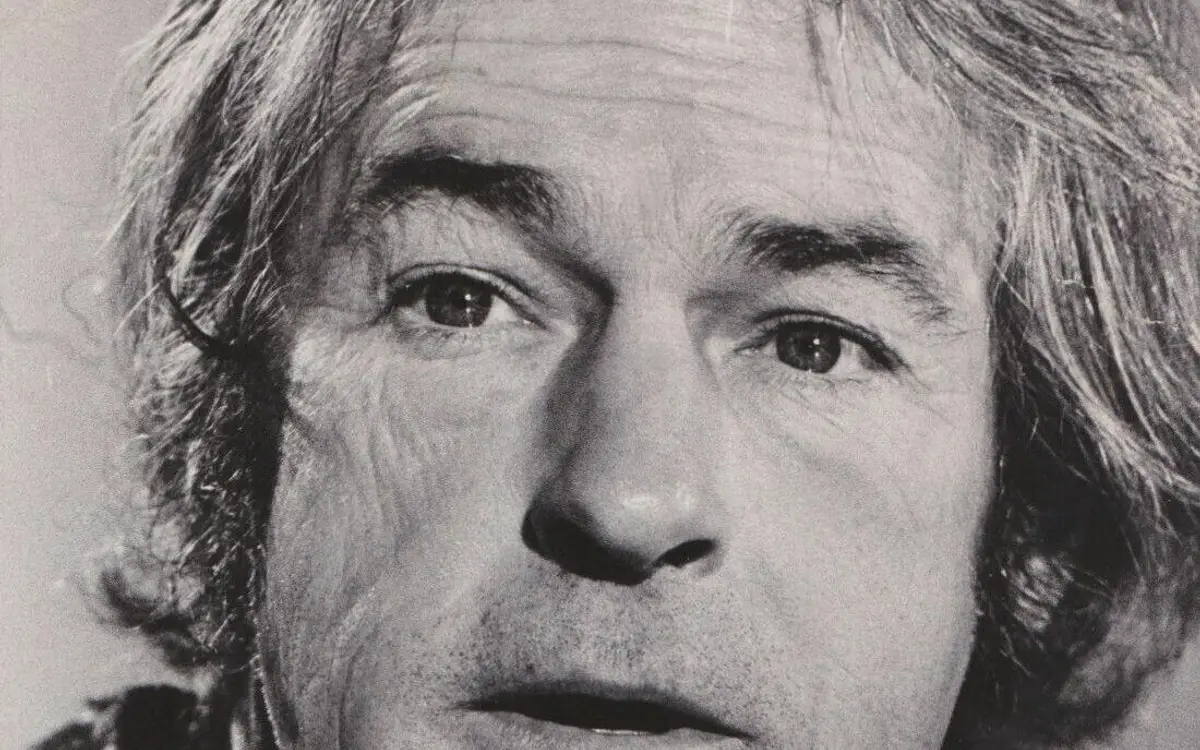
Timothy Leary in a 1969 press photograph, taken a few years after his dismissal from Harvard, at the height of his fame as a psychedelic advocate.
Early Life and Education
Leary was born in Springfield, Massachusetts, the only child of an Irish Catholic family. His father, a dentist, left the family when Leary was a teenager. His path through higher education was unsettled: he attended the College of the Holy Cross, then transferred under family pressure to the United States Military Academy at West Point, where he was accused of an honor-code violation, refused to resign, and was acquitted at court-martial but shunned by fellow cadets for the rest of his time there. He eventually left West Point, finished his undergraduate degree at the University of Alabama in 1943, earned a master's degree in psychology at Washington State College, and completed a PhD in clinical psychology at the University of California, Berkeley in 1950. His doctoral dissertation treated group therapy as a kind of measurable system, an early version of the ideas that would define his academic reputation.
From Clinical Psychologist to Psychedelic Researcher
Through the 1950s, Leary built a conventional academic career. He worked as an assistant clinical professor at the University of California, San Francisco and helped found the psychology department at Kaiser Hospital in Oakland. In 1957 he published The Interpersonal Diagnosis of Personality, which introduced what is now known as the interpersonal circumplex, a model for mapping personality traits along interconnected axes. The book was well received in professional circles and later influenced the popular field of transactional analysis, including Eric Berne's Games People Play and Thomas Harris's I'm OK, You're OK. This period of Leary's life was also marked by personal tragedy: his first wife, Marianne, died by suicide in 1955, leaving him to raise their two children alone.
In 1959, at the invitation of colleagues from Berkeley, Leary joined Harvard University as a lecturer in clinical psychology. The turning point in his life came the following year. In August 1960, on a trip to Cuernavaca, Mexico, Leary ate psilocybin mushrooms for the first time. He later said the experience taught him more about psychology in five hours than he had learned in the previous fifteen years of academic study.
The Harvard Psilocybin Project
Back at Harvard, Leary and a younger colleague, Richard Alpert, launched the Harvard Psilocybin Project to study the drug's effects on human subjects. Their most cited studies were the Concord Prison Experiment, which explored whether guided psilocybin sessions could reduce reoffending among released prisoners, and the Marsh Chapel Experiment, which examined whether psilocybin could reliably produce genuine religious experiences in seminary students. Both projects reported striking results, though later researchers challenged their scientific rigor.
The project drew growing scrutiny. Colleagues objected that Leary and Alpert took the drugs alongside their subjects, that they pressured students to participate, and that they gave psychedelics to undergraduates in violation of university policy. Coverage in the student newspaper, the Harvard Crimson, brought the controversy into public view. In May 1963, Harvard dismissed Alpert for giving psilocybin to an undergraduate off campus, and dismissed Leary as well, officially for missing scheduled lectures, though the drug controversy was widely understood to be the real cause. LSD and psilocybin were still legal in the United States at the time.
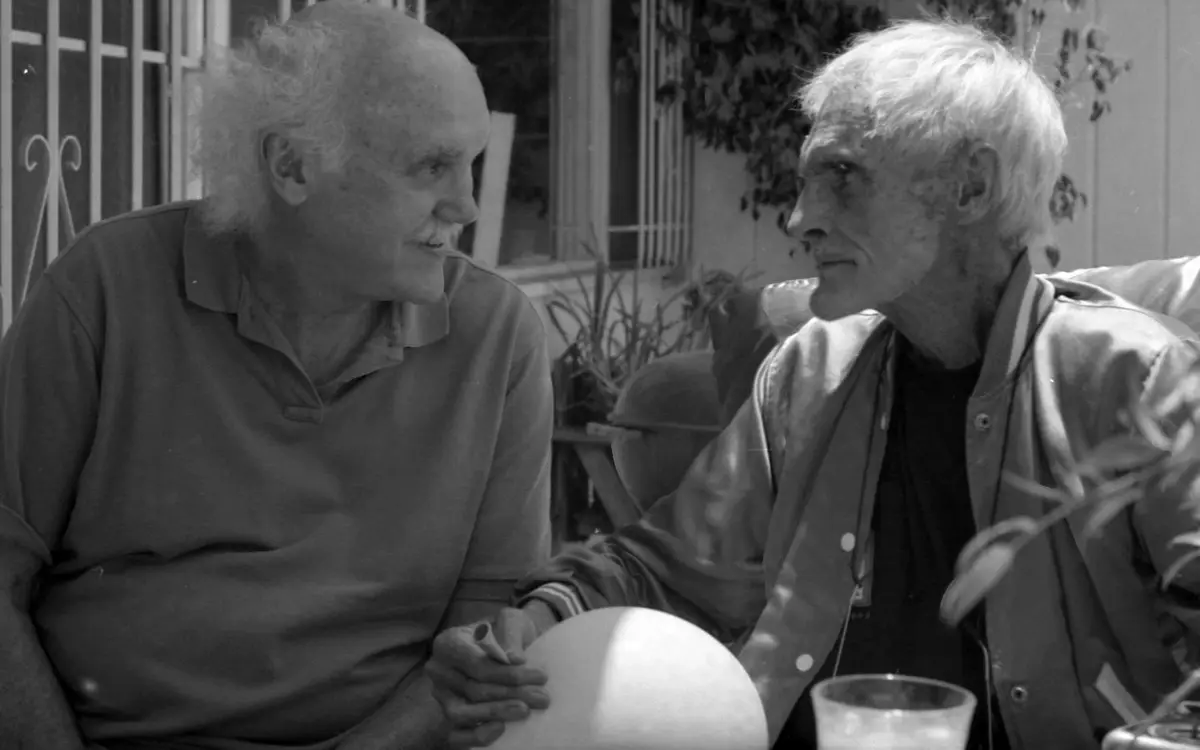
Leary with his Harvard collaborator Richard Alpert, who later became known as the spiritual teacher Ram Dass. The two ran the Harvard Psilocybin Project together before both were dismissed from the university in 1963.
Millbrook and the Rise of a Movement
After Harvard, Leary and Alpert continued their work outside the university, first through the International Federation for Internal Freedom, then through a communal group based at a 64-room estate in Millbrook, New York, donated by heirs to the Mellon fortune. Millbrook became the operational and spiritual center of Leary's psychedelic circle for roughly five years, hosting continuous LSD sessions alongside meditation and yoga retreats, while also drawing repeated raids from local law enforcement.
In 1964, Leary, Alpert, and Ralph Metzner published The Psychedelic Experience, a guide to LSD sessions modeled on the Tibetan Book of the Dead. In 1966, Leary reorganized his following as the League for Spiritual Discovery, a religious organization built around LSD as a sacrament, partly as a legal strategy to protect psychedelic use under freedom-of-religion arguments. That same year, Leary testified before a Senate subcommittee chaired by Thomas Dodd, arguing against criminalizing psychedelics and instead proposing a licensing system for adult users. The argument failed to persuade lawmakers: California banned LSD in October 1966, and it became illegal nationwide by 1968.
"Turn On, Tune In, Drop Out"
On January 14, 1967, Leary addressed roughly 30,000 people at the Human Be-In in San Francisco's Golden Gate Park and delivered the phrase that would define his public image: "turn on, tune in, drop out." Leary later said the slogan originated in a conversation with media theorist Marshall McLuhan, who suggested he needed "something snappy" to promote psychedelics. Leary's own, more detailed explanation of the phrase framed it as a three-part discipline: detaching from conventional social patterns, finding a personal practice that reconnected the individual to their own body and mind, and then returning to ordinary life changed by the experience. In practice, the slogan was absorbed by the wider counterculture as a simple call to drop conventional ambitions and expand consciousness through drugs, and it became one of the most quoted lines of the decade.
Arrests, Prison Escape, and Exile
Leary's public profile made him a repeated target for law enforcement; he was arrested roughly three dozen times over his life. His first serious case came in December 1965, when a small amount of marijuana was found on his daughter at the US-Mexico border. He was convicted under the Marihuana Tax Act and sentenced to 30 years, a sentence the Supreme Court later overturned in 1969 on the grounds that the law violated the Fifth Amendment right against self-incrimination. On the day of that ruling, Leary announced a campaign for governor of California against Ronald Reagan; John Lennon, whom Leary had met that year, wrote the song "Come Together" based on Leary's campaign slogan.
A second marijuana arrest in 1968 led to a ten-year sentence in January 1970, later combined with an earlier sentence for a total of twenty years. Assigned to a low-security prison after psychological testing that Leary, drawing on tests he had designed himself, deliberately gamed, he escaped over a fence in September 1970 with help from the radical Weather Underground. He and his wife Rosemary Woodruff fled the country, eventually reaching Algeria, where Black Panther leader Eldridge Cleaver initially sheltered them and later placed them under house arrest. The couple then moved to Switzerland, where an arms dealer offered them protection in exchange for film rights to Leary's story, and Swiss authorities briefly jailed but refused to extradite him despite pressure from the Nixon administration. Leary was finally detained in Afghanistan in 1972 by US federal agents and returned to the United States, where he was sent to Folsom Prison, at one point housed in a cell next to Charles Manson. He was released in 1976 after cooperating with FBI investigators, an episode that damaged his standing with former allies including Ginsberg and his own son.
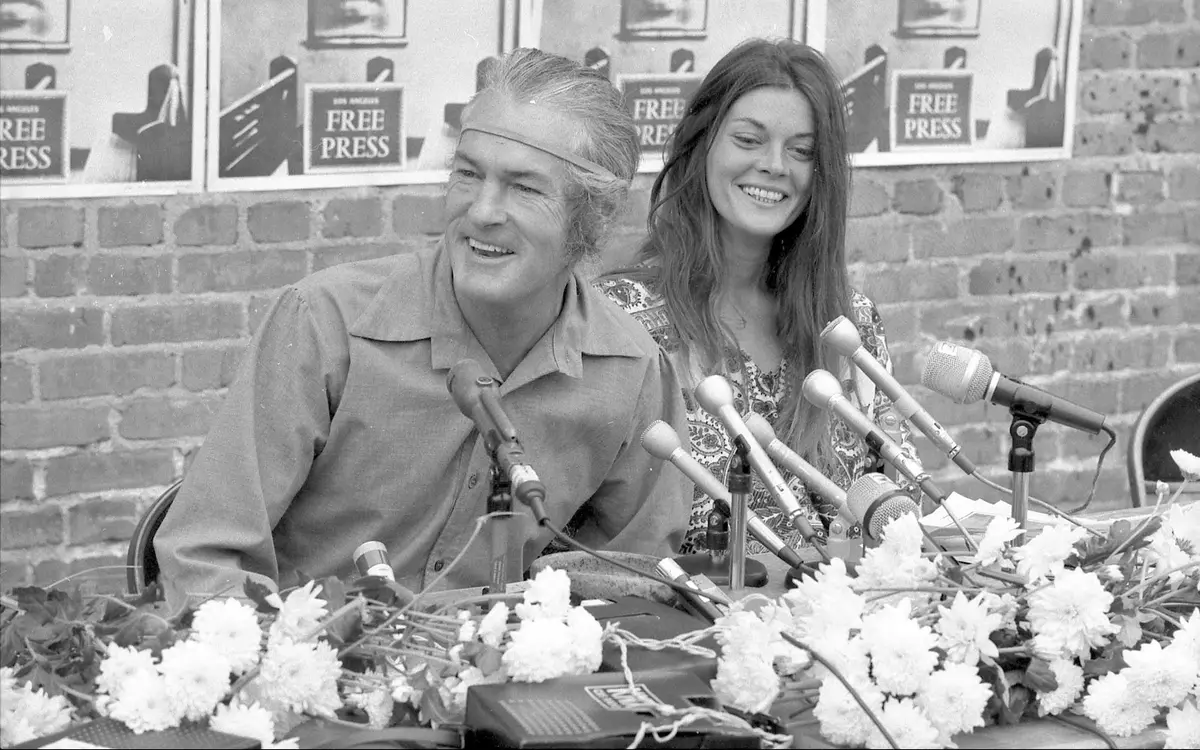
Leary with his fourth wife, Rosemary Woodruff, who helped arrange his 1970 prison escape and joined him during his years in exile. — Photo: Wikimedia Commons, Attribution / CC BY 4.0
Later Years: From Psychedelics to Cyberdelics
After his release, Leary settled in the Laurel Canyon neighborhood of Los Angeles and rebuilt a public career as an author and lecturer, at times billing himself a "stand-up philosopher." He toured with his former nemesis G. Gordon Liddy, the Watergate figure who had once led drug raids on Millbrook, in a series of debates that drew large audiences. During the 1980s, Leary largely stepped back from openly promoting drug use and instead became a prominent advocate for space colonization, life extension, and eventually personal computing, declaring that "the PC is the LSD of the 1990s." He befriended early virtual-reality pioneers, demonstrated emerging technology at his talks, and served as a consultant on Billy Idol's 1993 album Cyberpunk, becoming an unlikely bridge figure between 1960s psychedelic culture and 1990s digital culture.
Death
Diagnosed with inoperable prostate cancer in 1995, Leary approached his illness as he had approached much of his life: publicly and unconventionally, calling it "designer dying" and updating a website with details of his declining health in what amounted to an early blog. He explored the possibility of cryonic preservation before ultimately deciding against it, and he had his death filmed at his request. He died at his Beverly Hills home on May 31, 1996, at age 75. A portion of his cremated remains was later launched into orbit aboard a rocket alongside those of Star Trek creator Gene Roddenberry and other public figures, as part of a private space-burial company's mission.
Effect on Psychedelic Culture
Leary's influence on the 1960s counterculture is difficult to overstate. His slogans gave the psychedelic movement a public language, his Harvard credentials gave LSD advocacy an early veneer of scientific legitimacy, and his very public conflicts with the government helped make him a symbol of the era's clash between establishment authority and youth rebellion. His work with the Tibetan Book of the Dead shaped how a generation of musicians and artists thought about psychedelic experience, most famously inspiring the Beatles' song "Tomorrow Never Knows." At the same time, mainstream psychology and psychiatry largely distanced themselves from his research methods, and critics both inside and outside academia argued that his enthusiasm outran his evidence.
His legacy is correspondingly mixed. Supporters credit him with opening a serious conversation about the therapeutic potential of psychedelics, a conversation that has resurfaced in the clinical "psychedelic renaissance" of the 21st century, including renewed research at Harvard itself. Critics point to the ethical problems in his original studies, his sometimes reckless public claims about psychedelics' safety, and the personal toll his lifestyle took on people around him, including family members. Nearly three decades after his death, Leary remains a reference point whenever the history of psychedelic drugs, 1960s counterculture, or the boundaries between science and advocacy come up for discussion.
References
Wikipedia contributors. "Timothy Leary." Wikipedia, The Free Encyclopedia. en.wikipedia.org/wiki/Timothy_Leary
Wikipedia contributors. "Harvard Psilocybin Project." Wikipedia, The Free Encyclopedia. en.wikipedia.org/wiki/Harvard_Psilocybin_Project
Wikipedia contributors. "Turn on, tune in, drop out." Wikipedia, The Free Encyclopedia. en.wikipedia.org/wiki/Turn_on,_tune_in,_drop_out
Harvard University, Department of Psychology. "Timothy Leary (1920–1996)." psychology.fas.harvard.edu/people/timothy-leary
Hiatt, Nathaniel J. "A Trip Down Memory Lane: LSD at Harvard." The Harvard Crimson, May 23, 2016. thecrimson.com/article/2016/5/23/trip-down-memory-lane/
"LSD Guru Leary Dies at 75." The Harvard Crimson, June 3, 1996. thecrimson.com/article/1996/6/3/lsd-guru-leary-dies-at-75/
VICE. "Timothy Leary Turns 100: America's LSD Messiah, Remembered By Those Who Knew Him." October 23, 2020. vice.com/en/article/timothy-leary-lsd-acid-history/
The Washington Post. "The Ultimate Trip of Timothy Leary." June 1, 1996. washingtonpost.com/archive/lifestyle/1996/06/01/the-ultimate-trip-of-timothy-leary/18b3d0f7-fdb2-4ceb-ac26-b087bb88e68f/
Baltimore Sun. "'60s psychedelia guru Timothy Leary, 75, dies." baltimoresun.com/1996/06/01/60s-psychedelia-guru-timothy-leary-75-dies-lsd-advocate-tapped-into-information-age/
NPR. "Father Of The Psychedelic Movement, Timothy Leary." Fresh Air, October 21, 2020. npr.org/2020/10/21/926181349/father-of-the-psychedelic-movement-timothy-leary
New York Public Library. "Timothy Leary Papers, 1910–2009" (finding aid). archives.nypl.org/mss/18400
On an order, this is where an editor reads the article against the brief on the left and either approves it or sends it back. Nothing reaches a client before that happens.
Sample 05
LSD Made Illegal in the USA: When, Why, Who, and Its Effect on Society
A question-shaped brief answered in the shape of the question: dated legislation, named people, and a section that marks its own shelf life.
The brief
LSD Made Illegal in the USA: When, Why, Who, and Its Effect on Society
LengthAI-recommended: 1,700–2,300Guidance, not a rule — the hard cap is 3,500 words.
Keywords
when was lsd made illegalcontrolled substances actschedule idrug abuse control amendments
Instructions
Answer the question in the title directly — a reader searching this wants dates and names, not an essay that arrives at them. Legislation by year, with the specific act and the specific date. Flag any section covering current policy as current-as-of, because it will age.
Links & sources
Keep the article self-contained — no outbound links.
End with a reference list of what you drew on.
Images
3 auto-sourced
Words
1,855
Images
3
Outbound links
0
References
Listed
Introduction
Lysergic acid diethylamide (LSD) began as an obscure pharmaceutical compound studied by psychiatrists and ended up as one of the most tightly restricted substances in American law. Its path from research tool to Schedule I narcotic took less than three decades, and the policy decisions made in the mid-to-late 1960s continue to shape drug law, mental health research, and cultural memory today. This article traces when LSD was banned, why lawmakers acted, who was involved, what the world looked like before and after prohibition, and how the picture is shifting again in 2026.
Before the Ban: A Promising Research Drug
LSD was first synthesized in 1938 by Albert Hofmann, a chemist at Sandoz Laboratories in Basel, Switzerland, who was investigating derivatives of the ergot fungus as circulatory stimulants. He discovered its psychoactive properties by accident in 1943 after absorbing a small amount through his skin, then deliberately tested it days later in what became known as the first "acid trip."
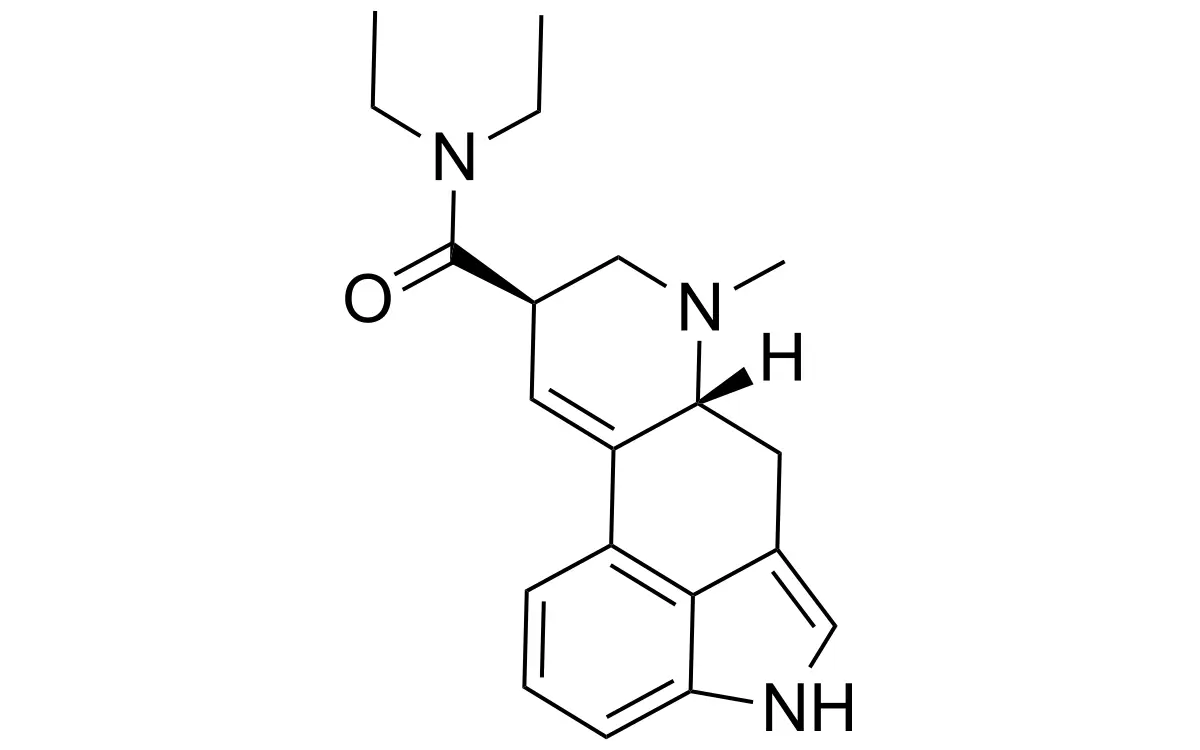
The skeletal structural formula of lysergic acid diethylamide (LSD).
From 1950 onward, Sandoz marketed LSD to the psychiatric and research community under the brand name Delysid, distributing it widely and cheaply to encourage study. Through the 1950s and into the early 1960s, LSD became one of the most extensively studied psychoactive substances in medicine, generating thousands of scientific papers. Researchers explored it as a tool to model psychosis, as an aid to "psycholytic" psychotherapy, and as a treatment for anxiety, depression, and especially alcoholism, where results were considered particularly promising. The Central Intelligence Agency also secretly tested LSD on unwitting subjects during this period as part of the MKUltra program, seeking uses in interrogation and mind control.
A turning point came in 1963, when Sandoz's patent on LSD's production process expired. The company lost its exclusive control over manufacturing, and the drug could legally be synthesized by others. Around the same time, Harvard psychologists Timothy Leary and Richard Alpert began promoting LSD and psilocybin outside clinical settings, popularizing psychedelics among students and, later, the broader counterculture. By the mid-1960s, LSD had moved well beyond the laboratory and into recreational use, closely associated with the hippie movement, the Haight-Ashbury district of San Francisco, and figures like Ken Kesey and the Merry Pranksters.
When LSD Was Made Illegal
The move to criminalize LSD unfolded in stages rather than a single act:
1965 — The Drug Abuse Control Amendments, signed July 15, 1965, gave the federal government (through the FDA) authority to regulate depressant, stimulant, and hallucinogenic drugs, targeting illicit manufacture and distribution.
1966 — California and Nevada became the first states to specifically criminalize LSD, both signing bans on May 30, 1966. Nevada's took effect immediately; California's took effect on October 6, 1966. New York passed similar legislation the same year. Sandoz halted its distribution of LSD in the United States that year as well, and the FDA had already begun shutting down LSD research programs in 1965.
1968 — Congress passed an amendment to the Food, Drug, and Cosmetic Act, effective October 1968, that made simple possession of LSD a federal crime for the first time (earlier federal law had focused on manufacture and sale).
1970 — President Richard Nixon signed the Comprehensive Drug Abuse Prevention and Control Act, which included the Controlled Substances Act (CSA), on October 27, 1970. The CSA created the modern drug scheduling system and classified LSD as a Schedule I substance — defined as having a high potential for abuse and no currently accepted medical use — placing it in the same legal category as heroin.
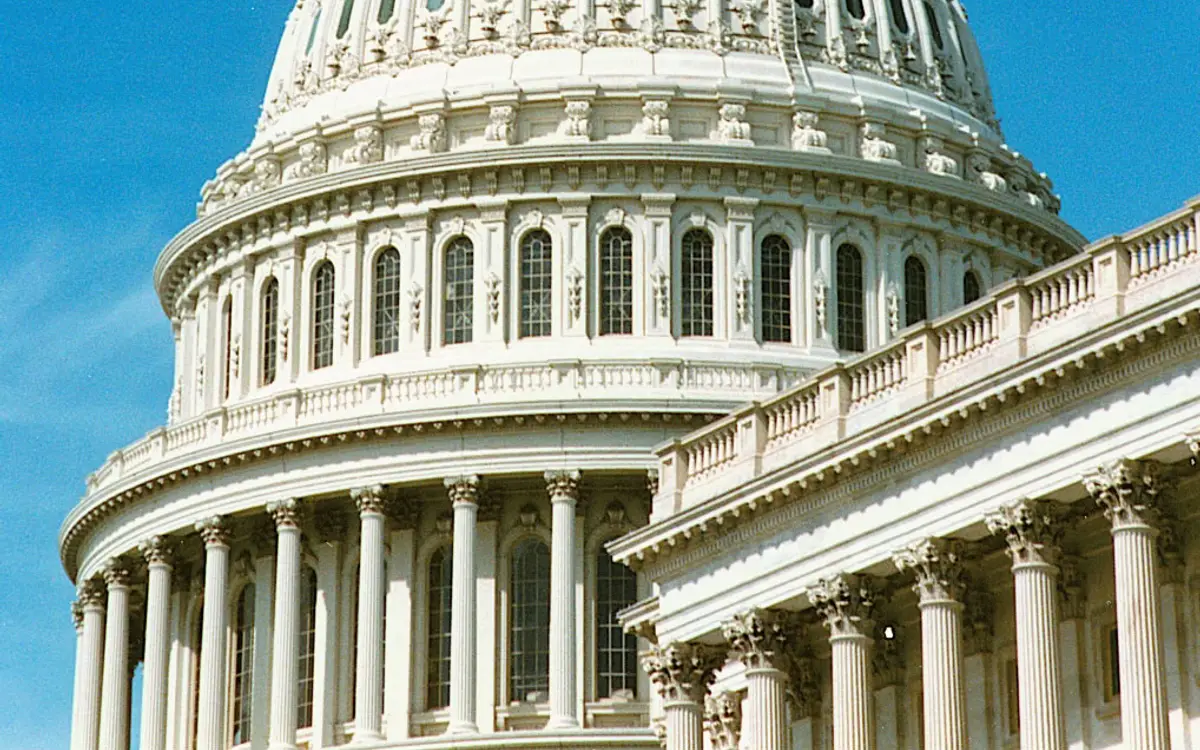
The U.S. Capitol, where Congress passed the Drug Abuse Control Amendments of 1965 and, later, the Controlled Substances Act of 1970.
Why LSD Was Banned
Several converging forces drove prohibition:
Loss of manufacturing control: Once Sandoz's patent lapsed in 1963, LSD could be produced by unregulated, unauthorized chemists, dramatically increasing its availability outside medical settings.
Association with counterculture and unrest: LSD became emblematic of the 1960s counterculture, campus protests, and opposition to conventional social norms and the Vietnam War. Its high-profile advocates, especially Timothy Leary, drew intense media and political attention.
Public alarm over harms: Sensationalized media coverage of "bad trips," psychiatric crises, and erratic behavior fueled public and congressional anxiety, even though the proportionality of these fears to actual risk was, and remains, debated by historians.
Congressional hearings: Senator Thomas Dodd's Special Subcommittee on Juvenile Delinquency held hearings on LSD in 1966, as did a Senate Subcommittee on Executive Reorganization chaired with involvement from Senator Robert F. Kennedy. These hearings examined both the drug's dangers and the abrupt termination of legitimate research programs.
Nixon's broader drug policy: The CSA of 1970 was part of the Nixon administration's larger "War on Drugs," which framed illicit drug use, including psychedelics, as a central domestic threat.
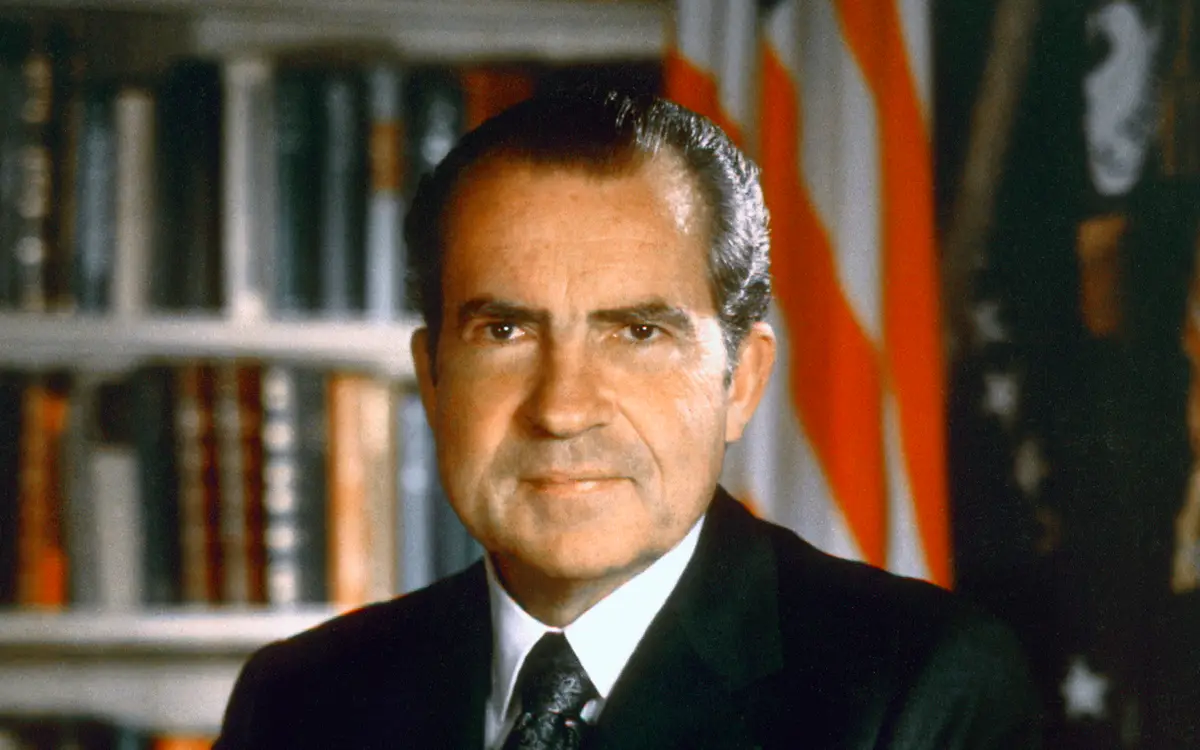
President Richard Nixon, official White House portrait, 1971. Nixon signed the Controlled Substances Act into law in October 1970, placing LSD in Schedule I.
Who Was Involved
Albert Hofmann — the Sandoz chemist who discovered LSD and its effects, and who continued to view it as having therapeutic promise even after prohibition.
Timothy Leary and Richard Alpert — Harvard researchers turned countercultural evangelists whose public promotion of LSD accelerated both its popularity and the political backlash against it.
Owsley Stanley — an underground chemist who mass-produced LSD after Sandoz's patent expired, supplying much of the drug used recreationally in the mid-1960s; his labs were raided by authorities in 1966 and 1967.
Senator Thomas Dodd (D-CT) — convened Senate hearings on LSD and other psychedelics in 1966 as part of juvenile delinquency investigations.
Senator Robert F. Kennedy (D-NY) — questioned federal officials about why promising LSD research programs were being shut down; his wife, Ethel Kennedy, had reportedly undergone LSD-assisted therapy.
President Richard Nixon — signed the Controlled Substances Act in 1970, formally placing LSD in Schedule I and cementing federal prohibition.
After the Ban: Effect on Society
Criminalization did not eliminate LSD use, but it fundamentally reshaped its social and scientific position:
Collapse of psychiatric research: The CSA's Schedule I classification effectively halted legitimate clinical research into LSD's therapeutic potential for decades. Scientists were required to return supplies, and new studies became bureaucratically prohibitive. What had been a promising area of psychiatric inquiry into treating alcoholism, anxiety, and depression went dormant.
Continued recreational use: Despite prohibition, LSD use persisted underground. Estimates suggest that more than a million Americans had tried the drug without medical supervision by 1970, and recreational supply chains adapted to illegality rather than disappearing.
Part of the broader drug war: LSD's prohibition became one piece of a larger federal drug control apparatus that critics, including some legal scholars and public defenders, argue contributed to mass incarceration and disproportionately affected certain communities.
Cultural stigma: Even where enforcement was inconsistent, the legal ban created lasting stigma around psychedelics that discouraged both scientific inquiry and open public discussion for roughly a generation.
The Psychedelic Renaissance and Recent Developments
Note: this section covers fast-moving, current policy events, current as of July 2026, and may be superseded by later developments.
Beginning in the 1990s and accelerating in the 2000s, nonprofit research organizations such as the Multidisciplinary Association for Psychedelic Studies (MAPS) and the Heffter Research Institute began rebuilding a scientific case for psychedelic-assisted therapy. The FDA granted "breakthrough therapy" designations to psilocybin for depression and MDMA for PTSD in the late 2010s, spurring renewed investment and clinical trials.
At the state and local level, Denver decriminalized psilocybin mushrooms in 2019; Oregon legalized supervised medical use of psilocybin and briefly decriminalized broader drug possession starting in 2020 (partially repealed in 2024); and Colorado decriminalized several natural psychedelics, including LSD's plant-derived cousins, under a 2022 ballot measure.
Most recently, on April 18, 2026, President Donald Trump signed an executive order directing federal agencies, including the FDA and Department of Health and Human Services, to accelerate research into and access to psychedelic-based therapies such as psilocybin and ibogaine, citing potential benefits for veterans and patients with treatment-resistant PTSD, depression, and addiction. The order was signed alongside HHS Secretary Robert F. Kennedy Jr., whose father had questioned federal officials about the shutdown of LSD research sixty years earlier. Following the order, the FDA announced regulatory actions in April 2026 to support development of a class of drugs it terms serotonin-2A agonists, which includes psychedelics like LSD and psilocybin. Reactions from the scientific and advocacy community have been largely positive, though some have expressed concern about the politicization of psychedelic science.
Conclusion
LSD's illegalization in the United States was not a single event but a process spanning 1965 to 1970, driven by the collapse of controlled manufacturing, the drug's entanglement with 1960s counterculture and political unrest, and congressional response to public alarm. Its Schedule I status halted a promising line of psychiatric research for decades while doing little to curb underground use, and it became emblematic of the broader War on Drugs. Sixty years later, the same institutions that criminalized LSD are now, in some cases, working to reopen the door to its therapeutic study, marking a notable reversal in the drug's long and contested relationship with American law and society.
References
Legal Clarity. "When Were Psychedelics Banned: History and Legal Status." legalclarity.org/when-were-psychedelics-banned-a-legal-history/
UC Berkeley Center for the Science of Psychedelics. "Psychedelics, the Law and Politics." psychedelics.berkeley.edu/law/
Wikipedia contributors. "History of Lysergic Acid Diethylamide." Wikipedia, The Free Encyclopedia. en.wikipedia.org/wiki/History_of_lysergic_acid_diethylamide
Wikipedia contributors. "Love Pageant Rally." Wikipedia, The Free Encyclopedia. en.wikipedia.org/wiki/Love_Pageant_Rally
Shakedown Gallery. "Fifty Years Underground: LSD Prohibition Began October 6, 1966." shakedowngallery.com/blogs/news/fifty-years-underground-lsd-prohibition-began-october-6-1966
Saint Jude Retreats. "Today In 'Addiction Is History': California Makes It Illegal to 'Turn On, Tune In, Drop Out' with LSD." saintjuderetreats.com/addiction/addiction_history/california-makes-it-illegal-to-turn-on-tune-in-drop-out-with-lsd/
Bay Area Television Archive. "Timothy Leary on 'LSD Boom.'" diva.sfsu.edu/collections/sfbatv/bundles/238702
EBSCO Research Starters. "Timothy Leary." ebsco.com/research-starters/history/timothy-leary
Encyclopedia.com. "LSD and the Law." encyclopedia.com/medicine/medical-magazines/lsd-and-law
Swiss National Museum Blog. "Tripping: The History of LSD." blog.nationalmuseum.ch/en/2018/10/tripping-on-lsd/
House of Switzerland. "The Swiss Beginnings of LSD." houseofswitzerland.org/swissstories/history/swiss-beginnings-lsd
Smithsonian Magazine. "The First LSD Trip Was a Literal Bicycle Ride 83 Years Ago." smithsonianmag.com/smart-news/the-first-lsd-trip-was-a-literal-bicycle-ride-83-years-ago-fans-of-the-psychedelic-celebrate-the-occasion-every-april-19-180988564/
PMC, National Institutes of Health. "Psychedelic Drugs — A New Era in Psychiatry?" pmc.ncbi.nlm.nih.gov/articles/PMC6787540/
PMC, National Institutes of Health. "Therapeutic Use of LSD in Psychiatry: A Systematic Review of Randomized-Controlled Clinical Trials." ncbi.nlm.nih.gov/pmc/articles/PMC6985449/
MAPS (Multidisciplinary Association for Psychedelic Studies). "When Bobby Kennedy Defended LSD." maps.org/news/media/when-bobby-kennedy-defended-lsd/
Tokin Woman Blog. "Is Ethel Kennedy's Experience with LSD Therapy Informing Current US Policy?" tokinwoman.blogspot.com/2026/04/is-ethel-kennedys-experience-with-lsd.html
Talking Joints Memo. "That Time Ted Kennedy Grilled Timothy Leary About Legalizing Cannabis and LSD." talkingjointsmemo.com/that-time-ted-kennedy-grilled-timothy-leary-about-legalizing-cannabis-and-lsd/
Ecstatic Integration (Jules Evans). "The Kennedys and Psychedelics." ecstaticintegration.org/p/the-kennedys-and-psychedelics
Medicine on Screen, National Library of Medicine. "Transcripts — LSD: Insight or Insanity?" medicineonscreen.nlm.nih.gov/transcripts-lsd-insight-or-insanity/
Baylor College of Medicine Blog Network. "A Renaissance of Research on Psychedelics Is on the Rise." blogs.bcm.edu/2022/09/02/a-renaissance-of-research-on-psychedelics-is-on-the-rise/
Journal of the American Academy of Psychiatry and the Law. "The Psychedelic Renaissance and Its Forensic Implications." jaapl.org/content/early/2020/01/16/JAAPL.003917-20
Wounded Healers Institute. "The Paradigmatic Collision of the Psychedelic Renaissance." woundedhealersinstitute.org/the-paradigmatic-collision-of-the-psychedelic-renaissance-law-medical-science-and-the-crisis-of-quantitative-reductionism/
ABC News. "Trump Signs Executive Order Accelerating Research into Psychedelic Drug Therapies." abcnews.com/Health/trump-signs-executive-order-accelerating-research-psychedelic-drug/story?id=132171927
Psychedelic Alpha. "President Trump Signs Executive Order to Accelerate Psychedelic Research and Access." psychedelicalpha.com/news/president-trump-signs-executive-order-to-accelerate-psychedelic-research-and-access/
PBS News. "Trump Signs Order to Hasten Review of Psychedelics." pbs.org/newshour/politics/trump-signs-order-to-speed-review-of-psychedelics
The Washington Post. "Trump Orders More Access to Psychedelics Like Psilocybin, Ibogaine." washingtonpost.com/politics/2026/04/17/trump-psychedelics-psylocibin-research/
STAT News. "Trump Order to Advance Psychedelic Treatments Generates Excitement — and Worries." statnews.com/2026/04/20/trump-eo-psychedelics-advocates-hail-executive-order-fret-politicized-science/
Scientific American. "Trump's Psychedelics Executive Order Could Accelerate New Treatments — Even for Children." scientificamerican.com/article/trumps-psychedelics-executive-order-could-accelerate-new-treatments-even-for-children/
U.S. Food and Drug Administration. "FDA Accelerates Action on Treatments for Serious Mental Illness Following Executive Order." fda.gov/news-events/press-announcements/fda-accelerates-action-treatments-serious-mental-illness-following-executive-order
NPR. "Trump Signs Order Fast Tracking Review of Psychedelics for Mental Health Disorders." npr.org/2026/04/18/nx-s1-5789859/psychedelic-treatments-mental-health
On an order, this is where an editor reads the article against the brief on the left and either approves it or sends it back. Nothing reaches a client before that happens.
Sample 06
Ann & Alexander Shulgin: The Couple Who Rewired Psychedelic Culture
The longest of the six, and the one with two subjects: the brief asks for a structure the writer has to build, not a template to fill.
The brief
Ann & Alexander Shulgin: The Couple Who Rewired Psychedelic Culture
LengthAI-recommended: 2,000–2,600Guidance, not a rule — the hard cap is 3,500 words.
Keywords
alexander shulginann shulginpihkalmdma
Instructions
Two subjects in one article — give both their own work rather than making one an appendix to the other. Chemistry explained for a reader without chemistry. Peer-reviewed sources where they exist.
Links & sources
Keep the article self-contained — no outbound links.
End with a reference list of what you drew on.
Images
3 auto-sourced
Words
2,167
Images
3
Outbound links
0
References
Listed
For nearly four decades, a modest house in Lafayette, California, a Bay Area town most people couldn't place on a map, served as an unlikely epicenter of psychedelic science. The property, known to those who passed through it simply as "the Farm," was home to a chemist and a self-taught therapist whose combined work would shape how the world understood, feared, criminalized, and eventually began to medicalize psychedelic drugs. Alexander "Sasha" Shulgin synthesized and tested more psychoactive compounds than perhaps anyone in history. His wife, Ann, brought the psychological framework that gave that chemistry meaning. Together they didn't just discover molecules — they built a philosophy, a literature, and eventually a movement around them.
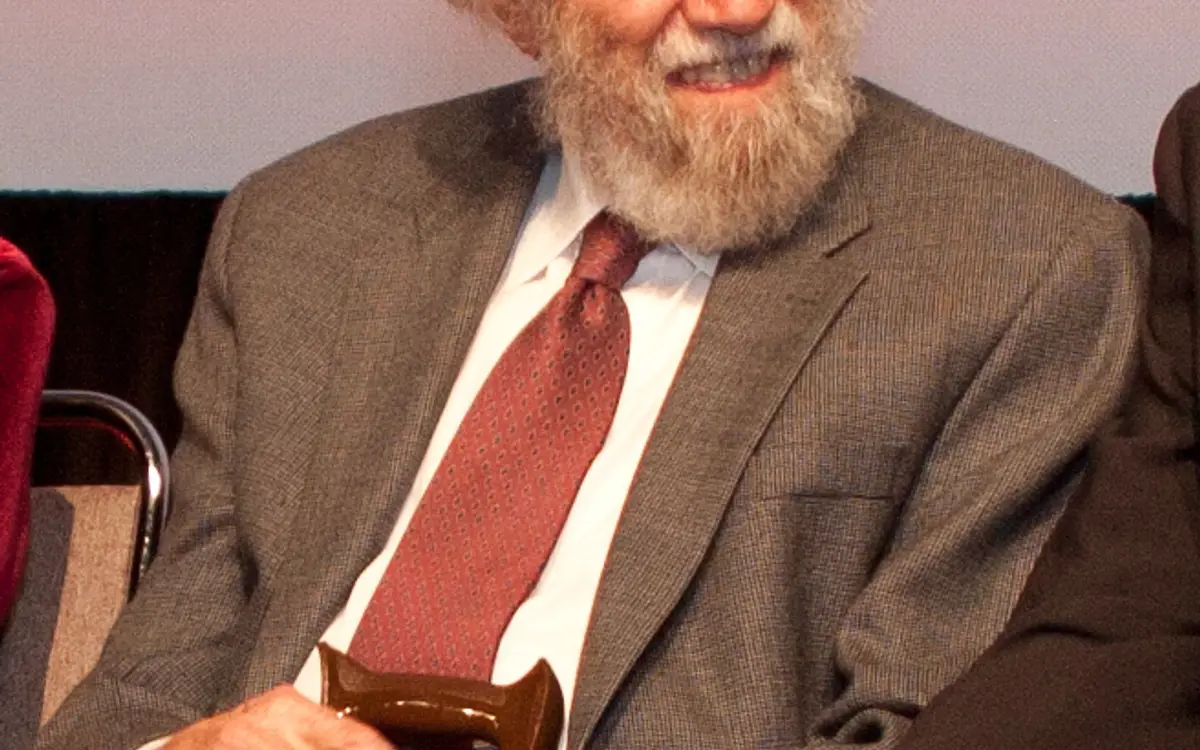
Alexander "Sasha" Shulgin at a 2010 event in Austin, Texas. — Photo: Charlie Llewellin, via Wikimedia Commons / CC BY-SA 2.0
The making of a chemist
Sasha Shulgin was born June 17, 1925, in Berkeley, California, to two schoolteachers. He was an academically gifted teenager, admitted to Harvard at sixteen on a full scholarship. But he never felt at home there, surrounded by classmates from wealth and social standing he didn't share. He dropped out after less than two years and joined the Navy, serving in the North Atlantic during World War II. After his discharge in 1946, he returned to California and enrolled at UC Berkeley, eventually earning a Ph.D. in biochemistry in 1954, followed by postdoctoral work in psychiatry and pharmacology at UC San Francisco.
His entry into industrial chemistry came at Dow Chemical, where he developed Zectran, one of the first biodegradable pesticides. It was a genuine commercial win for Dow, and the company rewarded him with something rare: freedom. Given wide discretion over what to research next, Shulgin chose psychedelics — a decision set in motion a few years earlier, in 1960, when he tried mescaline with friends. The experience surfaced long-buried memories and feelings, and left him fixated on a simple, startling idea: that a fraction of a gram of a white solid could unlock an entire hidden architecture of the mind.
By the mid-1960s, that fixation had outgrown what a corporate lab could accommodate. Shulgin left Dow in 1966 and set up an independent laboratory on his own property, continuing his work as a private consultant, including, for years, as an occasional contractor and expert witness for the very federal agency that would later end his run: the DEA. Because his research required legal access to Schedule I substances, he held a DEA license permitting him to handle and analyze controlled compounds. It was an unusual arrangement that let a lone chemist, working mostly out of a home lab, operate at the edge of both legitimate pharmacology and the underground drug culture developing around him.
Rediscovering MDMA
Contrary to popular shorthand, Shulgin did not invent MDMA. The compound was first synthesized by the German pharmaceutical company Merck in 1912, filed away as an intermediate with no evidence anyone tested it on a human being. Shulgin himself first made MDMA in 1965, but set it aside without trying it. It wasn't until the mid-1970s, after hearing about an unusual "special effect" attributed to the molecule, that he resynthesized it and, in September 1976, tried it himself — an experience his own lab notes describe in unusually rapturous terms, as a kind of homecoming.
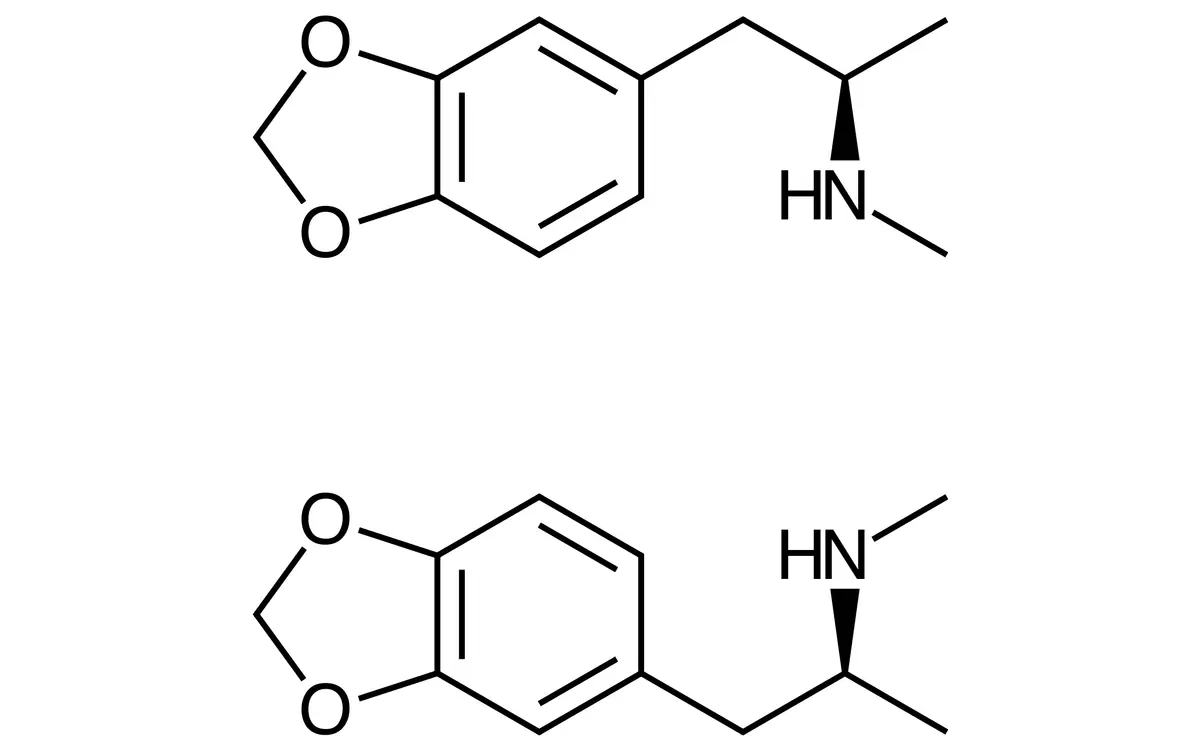
The skeletal structural formula of MDMA (3,4-methylenedioxymethamphetamine), the compound Shulgin resynthesized in the mid-1970s.
What happened next mattered more than the chemistry itself. In 1977, Shulgin introduced MDMA to Leo Zeff, a psychotherapist who became convinced of its potential as a tool for opening up patients in therapy. Zeff spent the following years quietly training and supplying hundreds of other therapists, and for a time MDMA circulated almost entirely within careful clinical settings — known to insiders by names like "Adam" or simply "empathy," years before the wider public would ever hear the word Ecstasy. Historians of the drug generally credit Shulgin not as MDMA's inventor, but as the person most responsible for recognizing its psychological significance and setting its therapeutic use in motion — which is why he's often, if imprecisely, called its "father."
MDMA was only the beginning. Over the following decades, working largely from that home laboratory, Shulgin discovered, synthesized, and personally bioassayed more than two hundred psychoactive compounds, most from two chemical families: the phenethylamines — including the well-known "2C" series such as 2C-B, 2C-E, 2C-I, 2C-T-2, and 2C-T-7 — and, later, a wide range of tryptamines. To bring some rigor to what was otherwise a deeply subjective undertaking, he developed a standardized method for rating a compound's effects and intensity, now known as the Shulgin Rating Scale — a framework still referenced in both clinical literature and the informal drug-testing culture that grew up online in the decades since.
The therapist behind the science
Ann Shulgin's path to Lafayette was less linear. Born Laura Ann Gotlieb on March 22, 1931, in Wellington, New Zealand, the daughter of an American diplomat, she spent her childhood moving between Italy, Texas, Cuba, and Canada before eventually studying art in California. By the time she met Sasha in 1978, she had been married and divorced three times and had worked for years as a medical transcriber while raising her children. She and Sasha married in 1981.
Ann was never a licensed psychotherapist, and she never pretended otherwise — she referred to herself plainly as a "lay therapist." But she brought a serious grounding in Jungian psychology to the couple's work, with a particular focus on what Jung called the Shadow: the parts of the self a person represses, denies, or is too afraid to face directly. She came to believe that certain psychoactive compounds, used carefully and with intention, could help dissolve the defenses that normally keep those parts of the psyche walled off. In the years before MDMA and 2C-B were made illegal, she worked directly with people in therapeutic sessions built around that belief, and she wrote some of the earliest practical guidelines for using MDMA safely within a therapeutic context — a foundational document for a field that wouldn't have institutional legitimacy again for another thirty years.
The division of labor between the two of them became something of a running line in their own household: he was the scientist, she was the psychologist. It was a partnership in the fullest sense — Sasha synthesizing and characterizing new molecules, Ann interpreting what those molecules did to the human mind, and both of them hosting a rotating cast of scientists, therapists, students, and psychonauts who made pilgrimages to the Farm over the decades.
PiHKAL, TiHKAL, and a collision with the DEA
In 1991, the Shulgins published PiHKAL: A Chemical Love Story — an acronym for "Phenethylamines I Have Known and Loved." It's a strange and genuinely unclassifiable book: half of it is a fictionalized memoir of their courtship and marriage, narrated through characters named Shura and Alice; the other half is a dense technical catalogue describing roughly two hundred compounds, along with detailed accounts of their subjective effects. A companion volume, TiHKAL: The Continuation, followed in 1997, covering tryptamines in the same dual format. Together, the books fused hard chemistry, autobiography, and philosophy in a way no one else had attempted, and they became foundational texts for an entire generation of underground chemists, researchers, and psychedelic explorers.
That publication came at a cost. In 1994, two years after PiHKAL appeared — reportedly prompted by an interview the couple had given to High Times — the DEA raided the Farm. Agents cited record-keeping violations and asked Shulgin to surrender the license that had let him legally handle Schedule I materials; he was also fined $25,000 for possessing analytical samples that had been sent to him for testing outside proper channels. It was a notable reversal: two earlier DEA inquiries, in 1986 and 1992, had turned up nothing. After consulting a lawyer, the Shulgins decided not to fight the license revocation, calculating that a legal battle would be costly and unlikely to succeed. Sasha kept working anyway, simply operating within the narrower legal bounds that remained open to him.
From the therapy room to the dance floor
The years after Shulgin introduced MDMA to Leo Zeff trace almost exactly the arc that would come to define — and endanger — the drug's reputation. What began as a tightly controlled clinical tool used by therapists moved, by the mid-1980s, into recreational nightlife, first in American clubs and then, memorably, in Ibiza and the broader European rave scene, where it became inseparable from the emerging culture of all-night electronic dance music. As MDMA's popularity spread far beyond the therapy rooms where it had started, so did uncontrolled manufacturing, adulterated pills, and a wave of overdose deaths tied to impurities, dosage, and overheating — problems that had far more to do with unregulated street chemistry than with the drug Shulgin had studied. In 1985, the DEA placed MDMA into Schedule I, the most restrictive category under U.S. law, over objections from researchers and even from a federal administrative law judge who had recommended the far less restrictive Schedule III.
That criminalization effectively ended the first era of MDMA-assisted psychotherapy for nearly three decades. But it didn't end the culture the Shulgins had helped create. PiHKAL and TiHKAL kept circulating — legally protected in the U.S. by the First Amendment, illegal to even possess in a number of other countries — and their published MDMA synthesis reportedly remains, to this day, one of the routes most commonly encountered in illicit manufacturing. The books also pushed regulators to tighten control over legal chemical precursors like safrole, a direct response to compounds documented in PiHKAL turning up in clandestine labs around the world.
A legacy that outlived them
Ann and Alexander Shulgin (center) at a 2010 screening and Q&A event in Austin, Texas for the documentary "Dirty Pictures." — Photo: Charlie Llewellin, via Wikimedia Commons / CC BY-SA 2.0
Sasha Shulgin died on June 2, 2014, at the Farm, at the age of 88, following years of declining health after a stroke. Ann died eight years later, on July 9, 2022, at the same home, at 91, after living with chronic obstructive pulmonary disease. The Farm remains tied to their memory: friends, researchers, and former students held Ann's memorial in Berkeley's Zellerbach Hall the following year, and the Shulgin Foundation now works to preserve their papers, their home, and their approach to psychedelic research and education.
That approach — rigorous, self-experimental chemistry paired with careful psychological interpretation — is now widely cited as a direct forerunner of what researchers call the "psychedelic renaissance": the resurgence of serious clinical interest in MDMA, psilocybin, and related compounds at institutions like Johns Hopkins and Imperial College London. The clearest thread runs straight back to Sasha's own molecule. Decades after he handed MDMA to Leo Zeff, the nonprofit MAPS (Multidisciplinary Association for Psychedelic Studies) — and later its associated company, Lykos Therapeutics — spent over twenty years building the clinical case for MDMA-assisted therapy as a treatment for PTSD, culminating in a New Drug Application submitted to the FDA in December 2023. The agency granted it priority review in early 2024, a genuine milestone as the first such application for any psychedelic-assisted therapy. But in August 2024, the FDA issued a Complete Response Letter declining to approve it, citing concerns about trial design and asking for an additional Phase 3 study. Lykos has since had further discussions with the FDA about a path forward, and the question of whether MDMA will ultimately win approval as a mental-health treatment remains open.
Whatever the outcome of that regulatory fight, the Shulgins' fingerprints are already permanent. Sasha gave the world — and its underground chemists alike — a working vocabulary and methodology for an entire class of understudied molecules. Ann gave that chemistry a psychological frame that treated altered consciousness as material for genuine self-understanding rather than mere escape. Between the two of them, working out of a house in the Bay Area suburbs, they turned a private hobby into a discipline serious enough that, half a century later, the FDA is still deciding what to do about it.
References
Multidisciplinary Association for Psychedelic Studies (MAPS). "Alexander Shulgin, Chemist Behind MDMA, Dies at 88." maps.org/news/media/alexander-shulgin-chemist-behind-mdma-dies-at-88/
Wikipedia contributors. "Alexander Shulgin." Wikipedia, The Free Encyclopedia. en.wikipedia.org/wiki/Alexander_Shulgin
Benzenhöfer, U. and Passie, T. "Rediscovering MDMA (ecstasy): the role of the American chemist Alexander T. Shulgin." Addiction, 2010. pubmed.ncbi.nlm.nih.gov/20653618/
Chemical & Engineering News (C&EN). "Alexander T. (Sasha) Shulgin." cen.acs.org/articles/92/i33/Alexander-T-Sasha-Shulgin.html
The Washington Post (via Nalle Winery reprint). "Chemist Alexander Shulgin, popularizer of MDMA, dies at 88." nallewinery.com/blog/chemist-alexander-shulgin-popularizer-of-mdma-says-his-favorite-mind-altering-drug-is-a-nice-moderately-expensive-zinfandel/
The Boston Globe. "Ann Shulgin, pioneer of psychedelics in therapy, dies at 91." July 13, 2022. bostonglobe.com/2022/07/13/metro/ann-shulgin-pioneer-psychedelics-therapy-dies-91/
CBS News San Francisco. "Ann Shulgin, pioneer of psychedelics in therapy, dies at 91 in Lafayette home." cbsnews.com/sanfrancisco/news/ann-shulgin-pioneer-of-psychedelics-in-therapy-dies/
The Shulgin Foundation. "About the Shulgins." shulginfoundation.org/about-the-shulgins/
Purdue University Archives and Special Collections. "Shulgin, Ann" (biographical note). archives.lib.purdue.edu/agents/people/3653
MuckRock. "The DEA raided 'the grandfather of ecstasy' over a High Times article." June 23, 2016. muckrock.com/news/archives/2016/jun/23/shulgin-dea/
Erowid. "1994 Raid of Shulgin Lab." erowid.org/culture/characters/shulgin_alexander/shulgin_alexander_raid.shtml
mdma.net. "Alexander Shulgin and 2C-T-7 (and PIHKAL, TIHKAL and the DEA)." mdma.net/alexander-shulgin/2c-t-7.html
Reality Sandwich. "Alexander Shulgin: Pioneering the Psychedelic Renaissance." realitysandwich.com/alexander-shulgin-legacy/
MAPS. "Molecules Have No Morals: Ecstasy Godfather Alexander Shulgin's Legacy." maps.org/news/media/molecules-have-no-morals-ecstasy-godfather-alexander-shulgins-legacy/
MAPS. "MAPS Statement on FDA's Public Release of Complete Response Letter for MDMA-assisted Therapy." September 4, 2025. maps.org/2025/09/04/fda-public-release-of-crl/
Psychedelic Support. "FDA's Decision: Why Lykos' MDMA for PTSD NDA Was Rejected." psychedelic.support/resources/fda-decision-lykos-ptsd-mdma-nda-rejected/
Fierce Biotech. "Lykos accepts FDA view that MDMA approval relies on fresh trial." fiercebiotech.com/biotech/lykos-accepts-fdas-view-reviving-mdma-treatnents-fortunes-requires-fresh-trial
On an order, this is where an editor reads the article against the brief on the left and either approves it or sends it back. Nothing reaches a client before that happens.
Your articles, this standard, in bulk.
One spreadsheet, one price per article, an editor on every piece before you see it.